Table Of Content
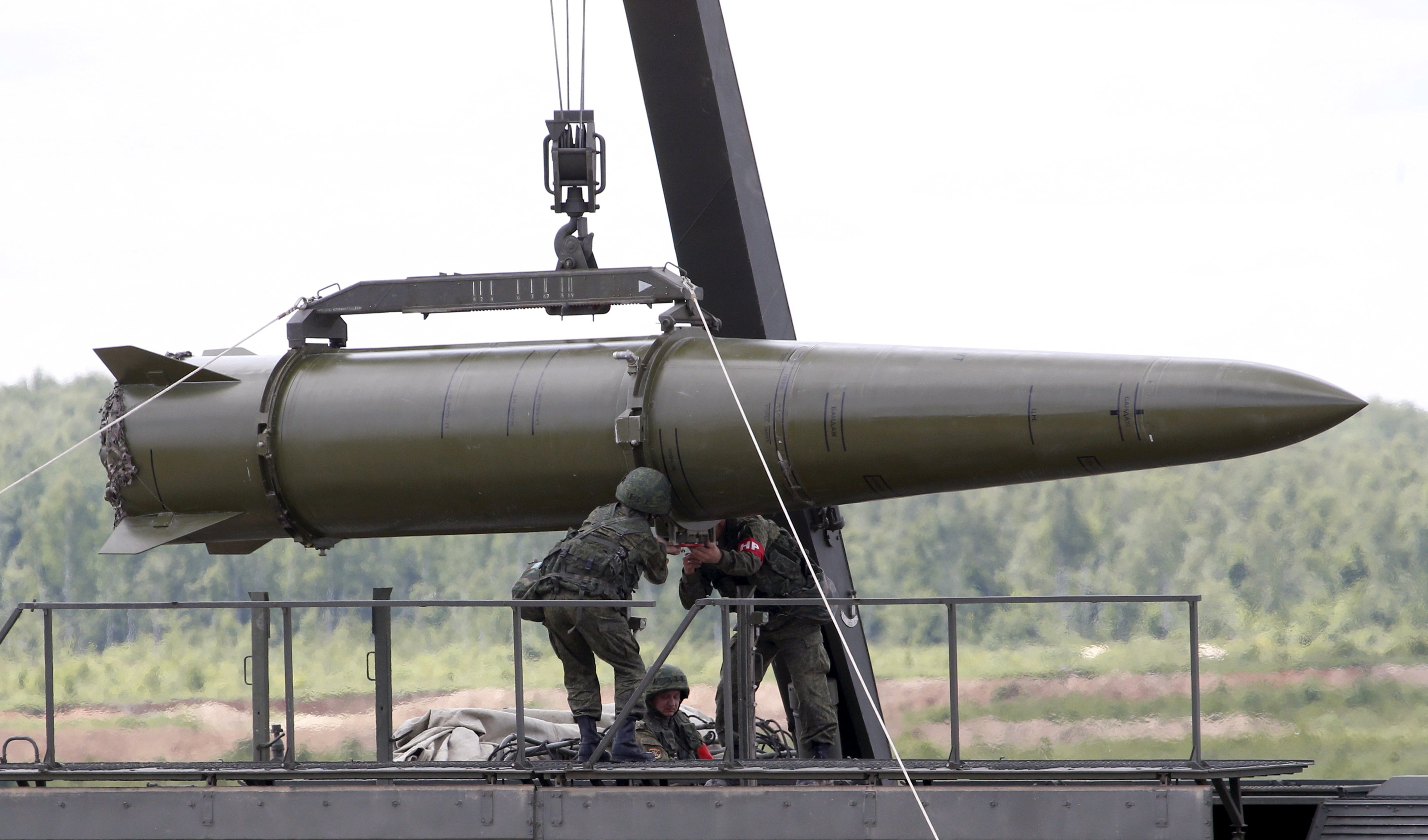
But more than the mere presence of the capability, the perceived willingness to use it is of critical importance to deterrent effect. Despite the sea-launched cruise missile’s low-yield warhead (and perceived “usability” in a conflict), it is difficult to envision a scenario in which the United States would resort to the first use of nuclear weapons. While critics have rightly focused on the program costs and timing of delivery, potential operational challenges for the Navy, and redundancy, proponents have countered that the new cruise missile will enhance deterrence and reassure allies facing adversaries with stocks of tactical nuclear weapons.
Deployment
Indeed, policymakers have already expressed concern with the SLCM-N detracting from core naval missions, “such as tracking enemy submarines, protecting United States carrier groups, and conducting conventional strikes on priority land targets,” according to introduced legislation. The Navy will also lose missile tubes when the Ohio-class guided-missile submarines (SSGNs) retire in the FY 2026 to FY 2028 timeframe. While the VPMs are intended to make up for lost space provided by the large SSGNs, the Navy’s total missile capacity will still decrease. Critics of nuclear deterrence argue that the SLCM-N will negatively impact stability with U.S. adversaries or start an arms race.
Development
It didn’t immediately provide more details about the numbers of missiles fired or their flight characteristics. The case for the SLCM-N’s contribution to deterrence and national security is clear, as initially made by the 2018 NPR. The more important questions and concerns lie in the practical and feasibility implications of acquiring the SLCM-N. DOD will have to decide on which platforms it will deploy the SLCM-Ns, where any outcome would likely impact critical conventional naval missions. While decisions such as platform, number of missiles, missile technology, and concept of operations have been examined in the AoA, this paper discusses potential options and outcomes to inform future policymaking. Ultimately, while developing the SLCM-N will require trade-offs, its development would provide a significant operational impact and is possible at a low cost.
New US nuclear chief takes fresh stance on sea-launched cruise missile
On September 22, the Russian submarine Veliky Novgorod (B-268) fired an unknown number of Kalibr cruise missiles (SS-N-27/30A) from a submerged position at targets in Syria’s Idlib province. The missiles traveled 300 km before striking command centers, armored vehicles, and training facilities. The report in state media came a day after South Korea’s military said it detected the North firing several cruise missiles into waters off its western coast.
A Better Case for SLCM-N Proceedings - April 2024 Vol. 150/4/1,454 - USNI News
A Better Case for SLCM-N Proceedings - April 2024 Vol. 150/4/1,454.
Posted: Sun, 31 Mar 2024 13:32:09 GMT [source]
Since the end of the Cold War, the policy of successive U.S. presidential administrations — including the Trump administration — has been to limit the United States’ reliance on nuclear weapons. Polling indicates that while a plurality of Americans would support Taiwan in the event of an attack by China, direct military action to defend the island remains unpopular. These are neither the diplomatic nor the domestic political foundations for a credible threat of limited nuclear use in response to conventional aggression by China. The SLCM-N was recommended early in 2018, but it took several years for officials to complete the military requirements and conduct an analysis of alternatives. By this point, there was a new administration, and the Biden administration’s Nuclear Posture Review (NPR) reversed the SLCM-N decision in 2022. While there was no disagreement over the regional nuclear threat or the need to counter adversary limited nuclear use, the Biden NPR concluded that the threat could be handled with existing—and soon to be modernized—nuclear forces, thereby avoiding the costs of a new program.
The presence of two nuclear-armed states increasingly hostile to the United States in the Indo-Pacific presents an increasingly complex strategic deterrence challenge to the United States. Even though the United States has thousands of nuclear warheads on land- and sea-based ballistic missiles that can reach the same targets intended for the LRSO, the military argues that a new nuclear standoff weapon is needed to spare a new penetrating bomber from enemy air-defense threats. Advocates of the sea-launched cruise missile program imply that it will enhance general deterrence. As a result, the probability that an adversary would undertake provocative action in the first place would decrease, making the United States and its allies more secure.
They may also question U.S. assurance commitments in general should the United States ignore the growing disparity with Russia and China. A nuclear capability that can be deployed in allies’ own regions can help reinforce that the United States is committed to the extension of its nuclear umbrella. Additionally, because it is sea-based, the SLCM-N can provide this benefit without the need for additional basing requirements. For this reason, NATO and Pacific allies would likely support the SLCM-N because it would improve deterrence of their aggressive neighbors without provoking domestic protests against nuclear weapons basing. A cruise missile is a jet- or rocket-propelled missile that flies aerodynamically at low altitude using an automated guidance system (usually inertial navigation, sometimes supplemented by either GPS or mid-course updates from friendly forces) to make them harder to detect or intercept. They have a shorter range and smaller payloads than ballistic missiles, so their warheads are smaller and less powerful.

So “having standoff and stealth is very important” given how long the long-range bomber will operate into the future. One of them, Sergei Karaganov, a top Russian foreign affairs expert who advises Putin’s Security Council, has argued that Moscow should ramp up its nuclear threats to “break the will of the West” or even launch a limited nuclear strike on NATO allies in Europe if the West fails to stop supporting Ukraine. It is believed to be able to carry a nuclear warhead or a conventional one, and potentially could stay aloft for a much longer time than other missiles and cover much more distance, thanks to nuclear propulsion.
Kh-101 / Kh-102 Development
But that could constrain those submarines from conducting their existing conventional missions. Instead, the Navy might retrofit a portion of its attack submarines to carry SLCM-Ns in addition to conventional weapons, allowing those boats to continue their conventional missions. During the Cold War, the deployment of TLAM-Ns on ships along with conventional missiles did not change the ships’ general mission to implement the Navy’s maritime strategy. One advantage of this option is that U.S. adversaries would not know which boats carried nuclear weapons, increasing uncertainty and deterrence. Indeed, much of the SLCM-N’s contribution to deterrence may be achieved with a relatively modest deployment, creating another opportunity to manage trade-offs. Allies may question the credibility of a U.S. response to limited employment of nuclear weapons in Europe or the Indo-Pacific using its high-yield, strategic nuclear forces.
Also, the eventual Soviet Fractional Orbital Bombardment System (FOBS) that served a similar purpose—it was just deliberately designed to deorbit before completing a full circle—was phased out in January 1983 in compliance with the SALT II treaty. Kim last week described the Pyongyang monument as an “eyesore” and called for its removal while declaring that the North was abandoning long-standing goals of a peaceful unification with South Korea and ordered a rewriting of the North’s constitution to define the South as its most hostile foreign adversary. He accused South Korea of acting as “top-class stooges” of the Americans and repeated a threat that he would use his nukes to annihilate the South if provoked. The ACM was supposed to undergo a life extension program to extend it to 2030, but after only 15 years of service the missile was retired early in 2007. An Enhanced Cruise Missile (ECM) was planned by the Bush administration, but it never materialized.
First, the SLCM-N can be deployed to the European or Indo-Pacific regions, increasing flexibility by providing the president with a proportional, credible response option. Deploying a regional nuclear system that can more proportionally respond to limited nuclear employment can convince adversaries with more certainty of U.S. willingness and capability to respond to even a limited nuclear attack. Rather than maintain the same nuclear posture meant for the previous strategic environment, the 2018 NPR recognized that U.S. posture must adapt to reflect the changed threat and proposed the development of two supplemental capabilities to increase the diversity and flexibility of U.S. nuclear forces. The first capability is a low-yield warhead for submarine-launched ballistic missiles (SLBM), the W76-2, which was deployed in early 2020. The 2018 NPR required the Navy to conduct an Analysis of Alternatives for development of the SLCM-N. The AoA will answer questions on SLCM-N development and concept of operations, including the platforms on which SLCM-N will be deployed, the number of missiles to acquire, and whether the SLCM-N will utilize old TLAMs, technology from the LongRange Standoff Weapon program (LRSO), or new technology.
Precise navigation would enable United States submarines to get an accurate fix of their positions before they launched their SLBMs, this spurred development of triangulation methods that ultimately culminated in GPS.[14] The motivation for having accurate launch position fixes, and missile velocities,[15] is twofold. It results in a tighter target impact circular error probable and therefore by extension, reduces the need for the earlier generation of heavy multi-megaton nuclear warheads, such as the W53 to ensure the target is destroyed. With increased target accuracy, a greater number of lighter, multi-kiloton range warheads can be packed on a given missile, giving a higher number of separate targets that can be hit per missile. There is no letter change in the US arsenal to distinguish the warheads of cruise missiles from those for ballistic missiles. Putting nuclear cruise missile on Virginia-class would be a quick and easy way of ramping up strategic capability. Currently, the only nuclear-armed subs are the fourteen Ohio-class ballistic missile subs, so SLCM-N on Virginia-class would more than double that at a stroke.
Because Russia and China have clear assured second-strike options available after a U.S. missile launch, preemptively launching nuclear weapons and risking nuclear retaliation when a chance exists that the U.S. missile launch was conventional would not be a rational response. North Korea’s advancing nuclear capabilities will also increase the challenge of deterring nuclear use at the regional level. Despite diplomatic efforts, the Kim regime continues to produce fissile material to build more nuclear weapons. It maintains an arsenal of short- and medium-range ballistic missiles that can strike a range of targets in the Indo-Pacific.
His statement was the first announcement of a successful test of the Burevestnik, which translates as “Storm Petrel.” It was first mentioned by Putin in 2018. The first satellite navigation system, Transit, used by the United States Navy, was first successfully tested in 1960. It used a constellation of five satellites and could provide a navigational fix approximately once per hour.
It makes anti-ballistic missile defense even more difficult, and even less economically viable, than before. Another concern is that because the United States also deploys conventionally armed cruise missiles, Russia or China will confuse a U.S. conventional cruise missile with a nuclear one and launch a nuclear attack in response. However, the logic that a state can characterize a warhead based on missile trajectory is fundamentally flawed when it is technically possible to put a nuclear payload on any type of delivery system. This problem is also not unique to the SLCM-N, as countries have deployed dual-capable weapons for years and this mistaken escalation has never occurred. In an escalating conventional conflict, a Russian or Chinese preemptive nuclear strike after a U.S. cruise missile launch is implausible.
The Navy and Air Force were developing their own technologies in parallel to solve what was essentially the same problem. To increase the survivability of ICBMs, there was a proposal to use mobile launch platforms (such as Russian SS-24 and SS-25) and so the need to fix the launch position had similarity to the SLBM situation. U.S. and South Korean officials have accused North Korea of providing artillery shells, missiles and other supplies to Russia for its war in Ukraine, possibly in exchange for economic assistance and military technology. Since entering service in 2012, the Russian air force has employed the Kh-101 several times in combat operations. Many observers have remained skeptical, arguing such a weapon could be difficult to handle and pose an environmental threat.


No comments:
Post a Comment